Services

Online prescription platforms, built by pharmacists

An online prescription service is not a shop with a checkout. A patient is assessed, a licensed prescriber decides, a pharmacist checks, and only then does anything ship. We build the whole path: the education pages, the assessment, the prescriber and pharmacist review, payment on approval, the patient portal and the handoff to the pharmacy. Six programmes we built are shown below, screen by screen.

Six

prescription programmes built, from adult ADHD assessment to compounded skincare, each shown below

No charge

for medication until a prescriber has approved; assessment fees are shown before the patient starts

Every step

written to the advertising, consent and privacy rules that apply to it, with the source named

How it works

The patient's path, and what sits behind each step

Every programme we build follows the same eight steps. What changes from one to the next is the clinical content, the safety rules and the people who review.

  1. Learn

    The patient: Education pages and published prices. A prescription medicine appears by name, price and quantity only; controlled medicines are discussed by category.

    Behind it: Clinical pages carry a reviewer and a dated last review.

    Built to Food and Drug Regulations, s. C.01.044, Controlled Drugs and Substances Act.

  2. Self check

    The patient: A short, free screener, one question per screen, with safety triage that points urgent answers to urgent care.

    Behind it: Nothing is sent until the patient chooses to continue.

  3. Assessment

    The patient: A full intake with branching, saving as you go, hard stops where an answer rules the programme out, and a review screen before submitting.

    Behind it: Every safety decision is checked again on the server, so a screened out answer cannot be clicked past.

  4. Consent and identity

    The patient: Separate consents for care, for messages and for marketing. Marketing is never a condition of care. Identity is checked by a person, not by facial recognition.

    Behind it: Each consent is stored with the record it belongs to.

    Built to PIPEDA, PIPA (BC).

  5. Prescriber decision

    The patient: A video or written visit with an independent prescriber licensed in the patient's province, with laboratory tests first where the condition needs them.

    Behind it: A review bench with the intake, the flags, a printable clinical report and an append only audit log.

    Built to CPSBC (BC), CPBC (BC).

  6. Payment

    The patient: Fees are shown before the patient starts. A medication charge is taken only after a prescriber approves.

    Behind it: Card details go to a hosted payment field and never reach the practice's servers.

  7. Pharmacy

    The patient: The patient keeps the choice of pharmacy. A pharmacist checks the prescription before anything is dispensed, then pickup or delivery, cold chain where needed.

    Behind it: The prescription goes to the pharmacy the patient chose.

    Built to CPBC (BC).

  8. Portal and follow up

    The patient: A portal with a status timeline, results with reference ranges where tests apply, and follow up booking. Emails and the portal home never show a medicine name or a diagnosis.

    Behind it: Reminders are sent only with consent, and every view of a result can be logged.

    Built to CASL.

Custom builds

Six prescription programmes, built end to end

Each programme started from the same eight steps and needed something the others did not. The workflow, the hardest part, and what each was reviewed against are set out for every one. Mediglen's intake is live; the other five are built and wait on launch decisions such as legal review, and are shown with test data only.

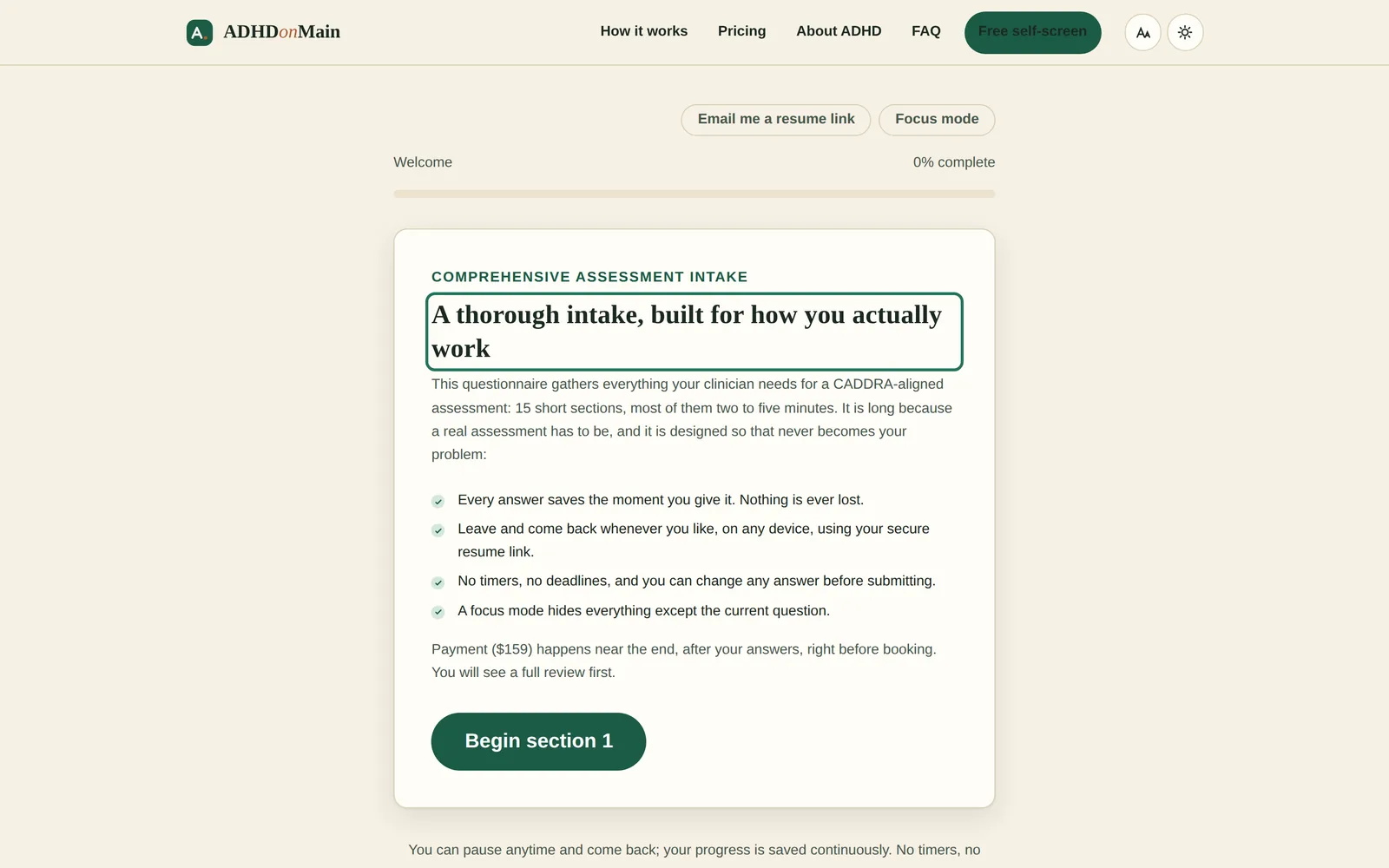
ADHD on Main assessment screen with section progress, time estimates and a focus mode control.

In preparation

Adult ADHD assessment clinic

ADHD on Main

The people this serves are, by definition, easily overwhelmed and likely to abandon a long form. Every decision followed from that: nothing lost, nothing rushed, nothing that reads as a test you can fail.

The workflow

  1. A free three minute self check, one question per screen, with safety triage.
  2. A fourteen section assessment with branching, continuous saving, resume at any point, and a focus mode.
  3. A review before submitting, with each consent checked separately.
  4. The assessment fee, paid beside a statement that no particular outcome is guaranteed.
  5. A video appointment with a licensed clinician.
  6. A portal with a prescription status timeline, and a pharmacist check before anything is dispensed.

The hard part. Built for people likely to abandon a long form: nothing is lost if they stop, nothing is rushed, and nothing reads as a test they can fail.
Written to College advertising norms for pharmacists and physicians, a recognised Canadian assessment framework, PIPEDA and BC PIPA, anti spam law for reminders, accessibility guidelines, and the restriction on advertising controlled medicines to the public, which is why medicines are discussed only by category. Review by health law counsel has not taken place.

See every screen of ADHD on Main in the folio

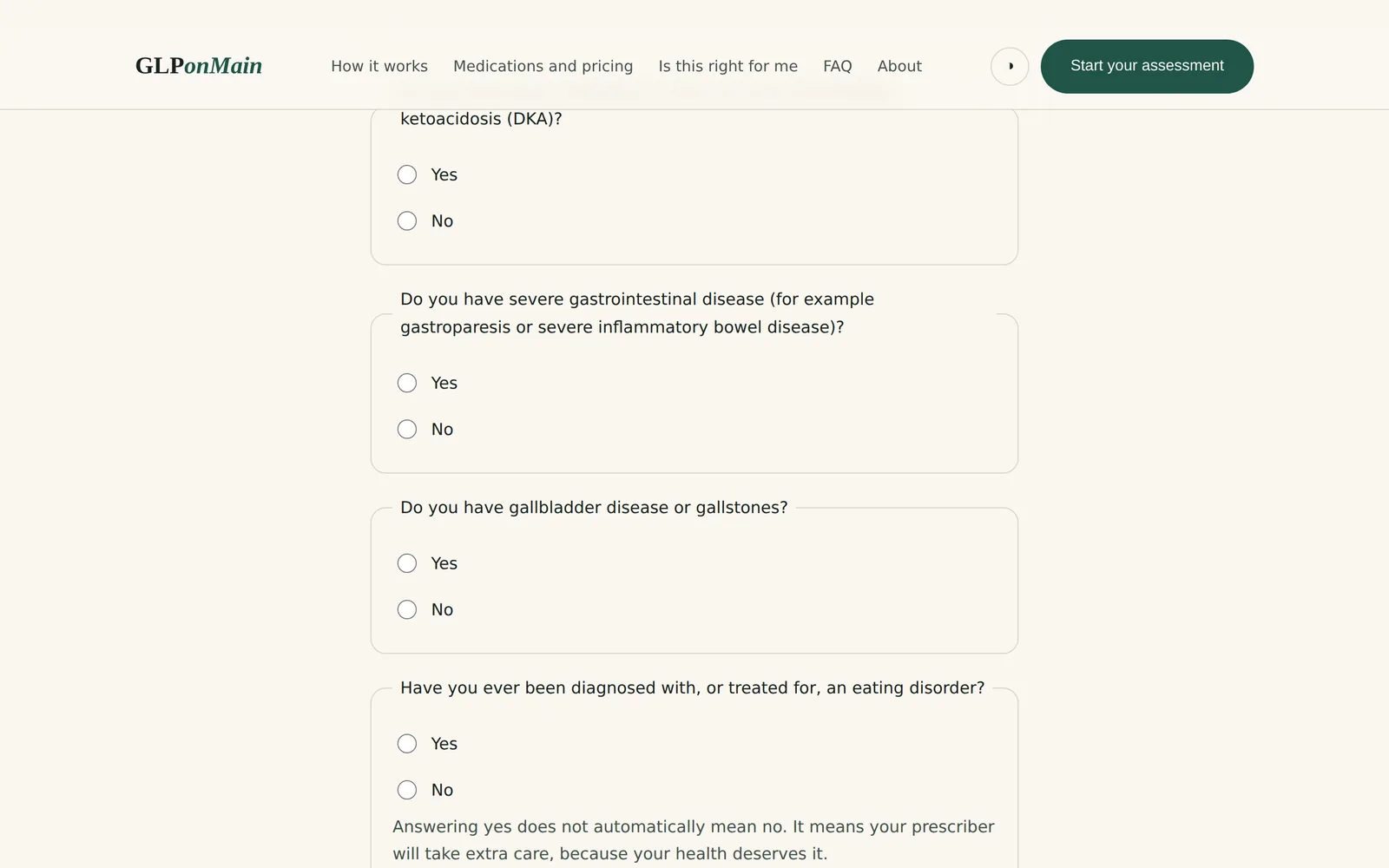
GLPonMain safety screening step ending the assessment with the reason given.

In preparation

Medically supervised weight management programme

GLPonMain

Weight management medication is advertised aggressively and dispensed casually. The brief was to build something that screens properly, refuses politely, and never takes money before a prescriber has agreed.

The workflow

  1. Education pages and full published pricing, with each medicine shown by name, price and quantity only.
  2. A six step assessment with body mass index, hard stops, and an explicit option to deny every screened condition.
  3. Consent cards, with marketing kept separate and optional.
  4. Every safety decision recomputed on the server.
  5. A prescriber and pharmacist review bench with flags and a printable clinical report.
  6. The card charged only once a prescriber has approved.

The hard part. Refusing politely: a stop screen that gives its reason, in a field where most sites sell first and screen later.

Written to section C.01.044 of the Food and Drug Regulations, College advertising norms for pharmacists and physicians, provincial rules on patient choice of pharmacy, and accessibility guidelines. Internal review 7 July 2026, including a check for efficacy claims attached to any named medicine. Counsel review is the outstanding item before launch.

See every screen of GLPonMain in the folio

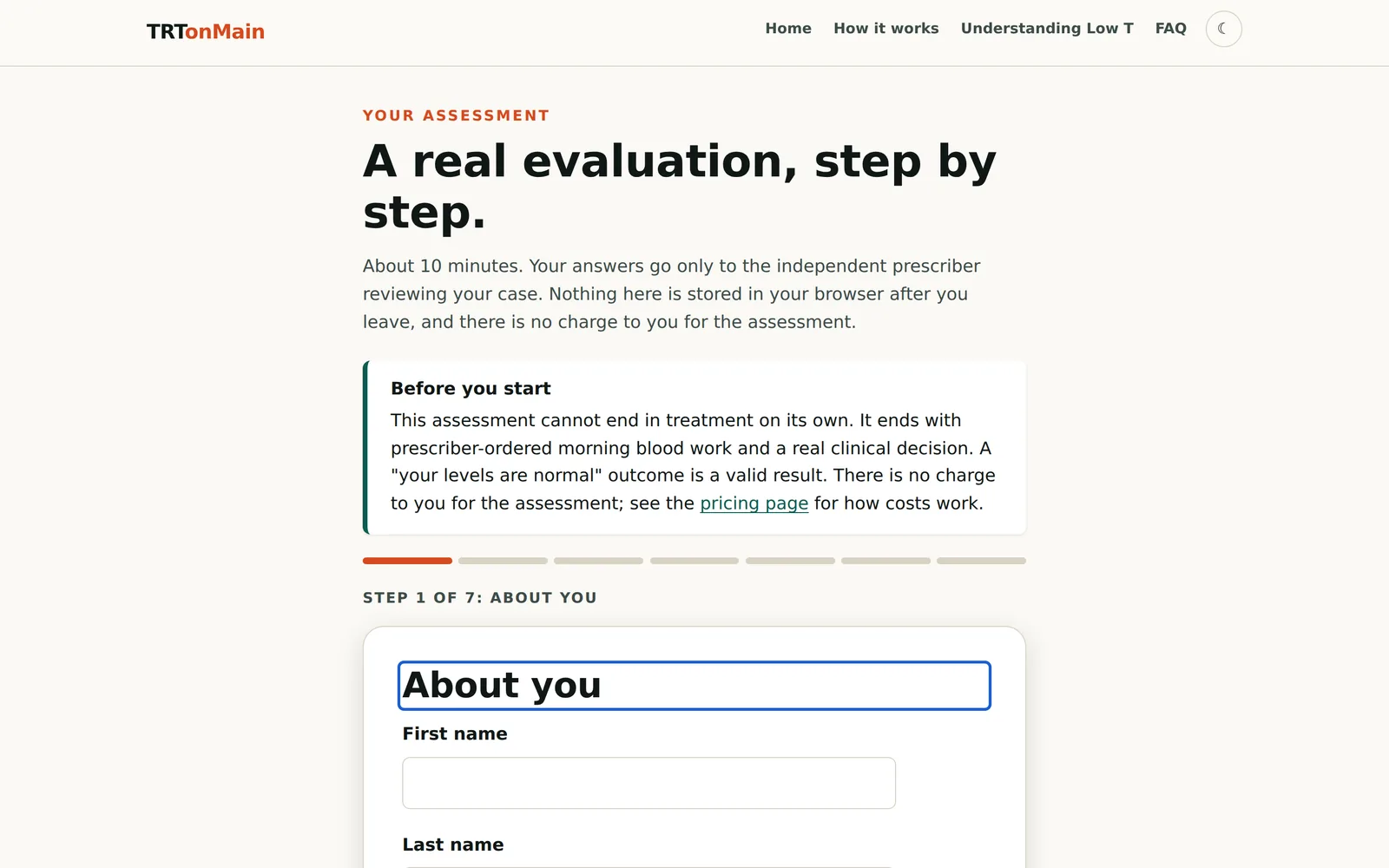
TRTonMain assessment step with hard stops, a risk screen and the laboratory gate.

In preparation

Testosterone assessment and monitoring programme

TRTonMain

This is a field full of sites that sell first and test later. The brief was to invert it: no diagnosis without blood work, no prescription promised at any point, and an honest answer when the problem turns out to be something else.

The workflow

  1. A statement in the first screen that only blood tests diagnose the condition and a prescriber decides.
  2. A seven step assessment that stops for age, province, or a goal the programme will not serve, with a risk screen and a fertility caution.
  3. Six separate consents.
  4. A laboratory gate: nothing proceeds until morning blood work is on file.
  5. An independent licensed prescriber reviews the results.
  6. A portal with results and reference ranges, where every view of a result is logged.

The hard part. Labs before any treatment conversation, and an honest answer when the problem turns out to be something else.

Built to the advertising restrictions that apply to controlled substances, College advertising and inducement rules for pharmacists, College advertising norms for physicians, privacy law, and accessibility guidelines. Education pages reviewed by two pharmacists licensed in British Columbia, 8 July 2026. External legal review has not taken place.

See every screen of TRTonMain in the folio

SkinOnMain formula bar with a live label, ingredient pricing and interaction alerts.

Built, awaiting launch

Prescription skincare and hair programme

SkinOnMain

Prescription skincare is usually sold as a subscription box with the formula hidden. The brief was the opposite: let an adult build their own formula, see what each ingredient costs, and be told when a combination does not make sense.

The workflow

  1. A safety questionnaire that routes to a gentler option, a prescriber flag, an in person referral, or no sale at all.
  2. A formula builder with the price of each ingredient and an evidence grade for each active.
  3. Alerts when two ingredients overlap or do not belong together.
  4. A pharmacist check of the finished formula.
  5. A prescriber decision.
  6. Compounded and dispensed by the pharmacy, for skin and for hair from the same engine.

The hard part. Letting a patient build their own compounded formula while being willing to say no to it.

Written to the College of Pharmacists of British Columbia framework for compounding, dispensing and returns, to PIPEDA and BC PIPA for privacy, and to the prescription drug advertising limits in the Food and Drug Regulations. Clinical sign off is pending and every clinical page says so.

See every screen of SkinOnMain in the folio

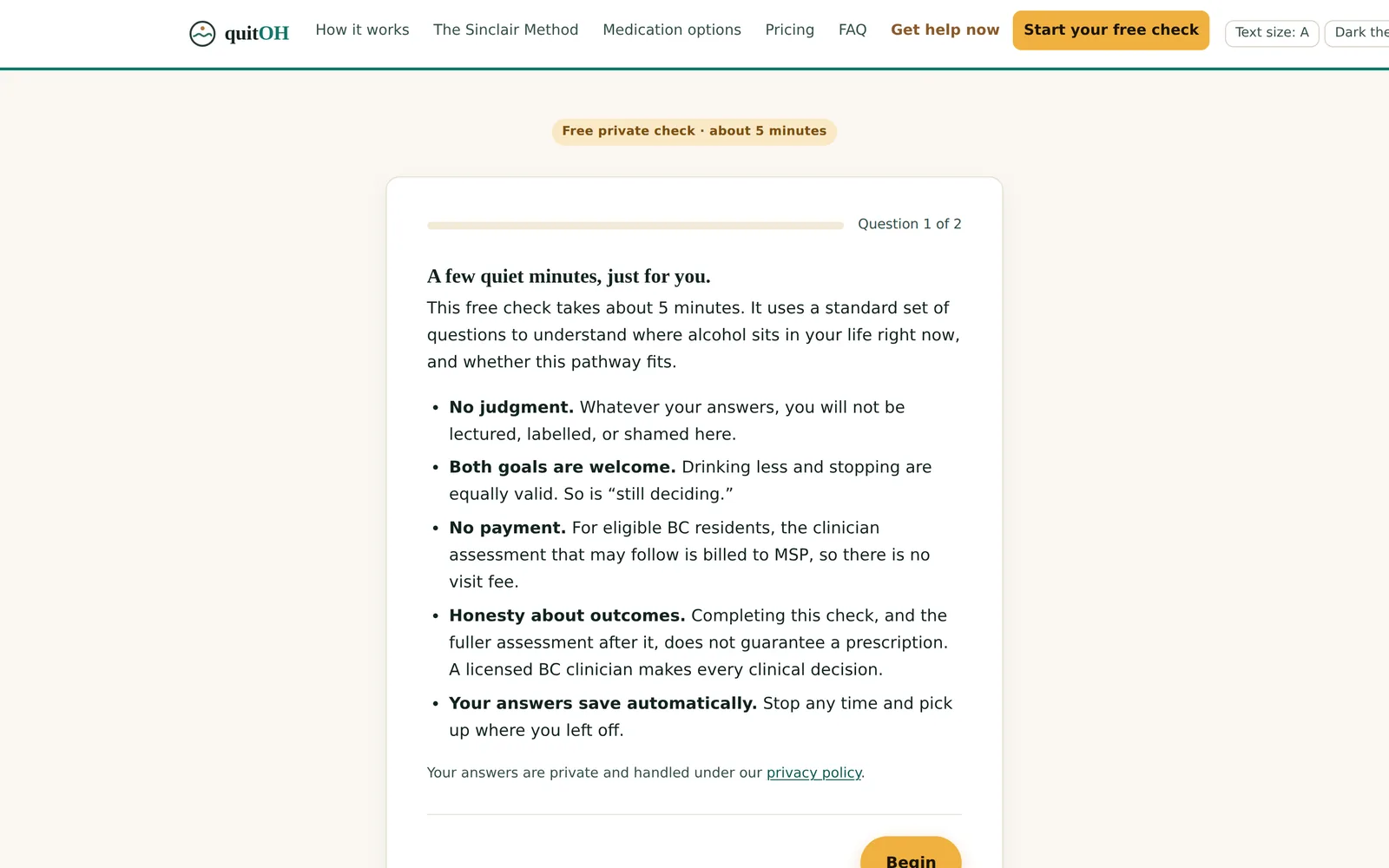
quitOH free check showing one screening question at a time.

Built, awaiting launch

Alcohol support programme

quitOH

Most people who wonder about their drinking never ask anyone. The brief was to make the first step private, free, and impossible to feel judged by, and to route the small number of people in danger to help immediately.

The workflow

  1. A free, recognised screening questionnaire, one question per screen, saving as you go.
  2. A withdrawal safety gate that redirects to urgent care, and a separate opioid check.
  3. An eleven section intake, with consent to view the provincial medication record or a photograph of each label.
  4. Four separate consents, and identity reviewed by a person.
  5. Clinic and pharmacy roles kept visibly separate.
  6. Crisis lines in the footer of every page.

The hard part. Making a private question safe to ask, and interrupting the flow the moment an answer means danger.

Content written against the 2023 Canadian guideline for high risk drinking and alcohol use disorder, the WHO screening instrument, Health Canada limits on prescription drug advertising to the public, and College advertising norms for pharmacists and physicians. Clinical reviewers are named on the site.

See every screen of quitOH in the folio

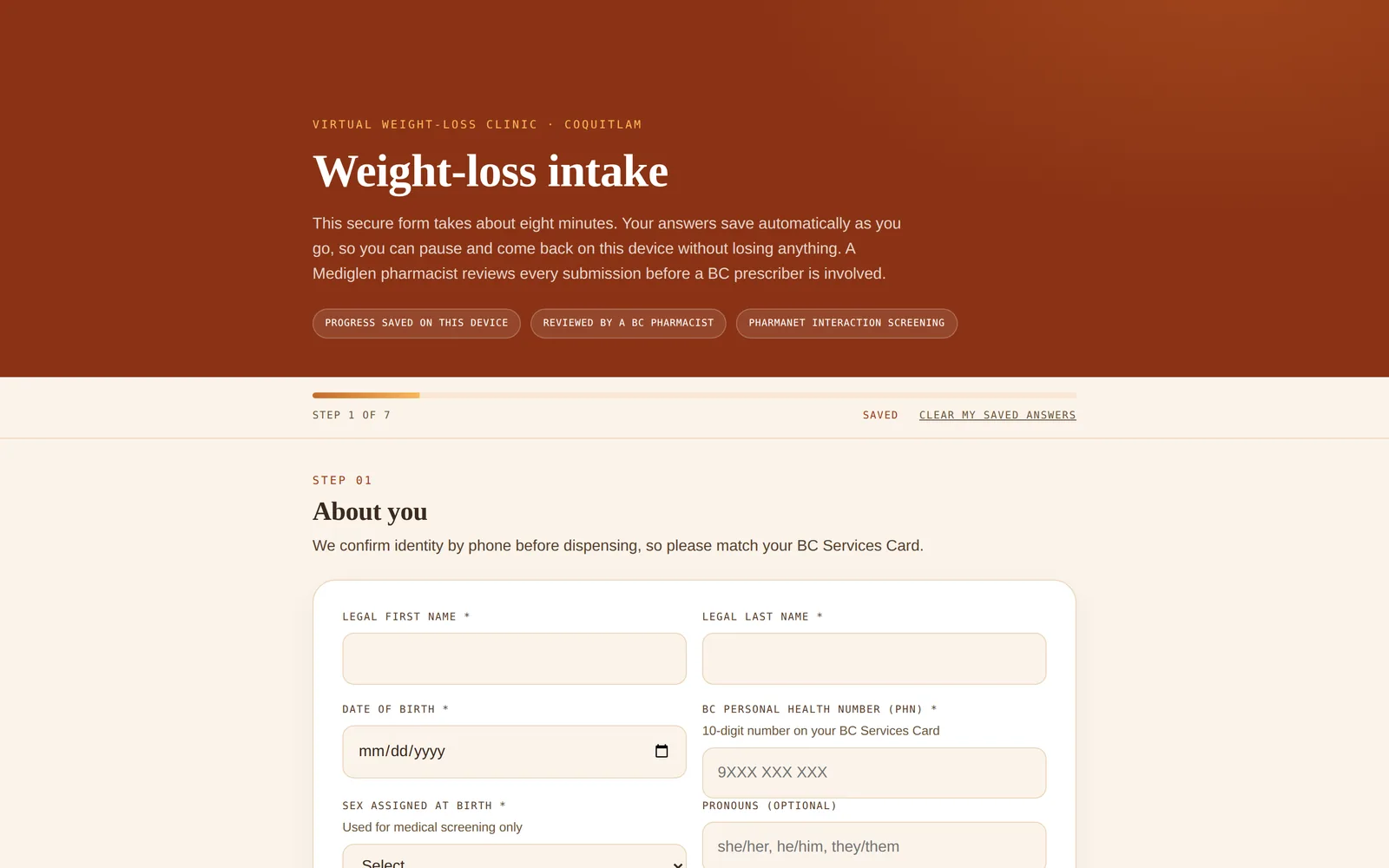
Mediglen weight management intake with a progress bar, autosave and a control to erase your answers.

Live

Independent community pharmacy with a compounding laboratory

Mediglen Pharmacy and Compounding

An established pharmacy next to a medical clinic, serving seniors, their adult children, and prescribers. The previous site could be read but not used: its forms silently lost every submission.

The workflow

  1. A weight management clinic page with cash pricing and pharmacist review bylines.
  2. A seven step intake that saves as you go, with a control to erase your own answers.
  3. A clinical summary document produced in the patient's own browser.
  4. A staff review queue with an append only audit trail.
  5. Cold chain delivery across ten cities.

The hard part. A working intake on a site whose previous version lost every form submission.

Clinical pages reviewed by two pharmacists licensed in British Columbia for accuracy, current Health Canada authorization status, and consistency with College of Pharmacists of British Columbia practice standards. Last review 13 May 2026. Privacy posture reviewed against PIPEDA and BC PIPA in July 2026.

See every screen of Mediglen Pharmacy and Compounding in the folio

In every build

The parts every prescription platform needs

Assessment engine

Questionnaires defined in configuration, with branching, hard stops, saving as you go, and every answer checked again on the server.

Consent and identity

Separate consents for care, messages and marketing, and identity reviewed by a person.

Review bench

A queue for prescribers and pharmacists, with flags, a printable clinical report and an append only audit log.

Payment on approval

A hosted payment field, fees shown up front, and medication charged only after a prescriber approves.

Visits and laboratory gates

Video visit booking, and a gate that holds the pathway until test results are on file.

Pharmacy handoff and refills

The prescription goes to the pharmacy the patient chose, with refill requests and delivery, cold chain where needed.

Patient portal

A status timeline, results with reference ranges, passwordless sign in, and no medicine names or diagnoses on the home screen.

Messages with consent

Reminders and follow ups sent only with consent, with no health details in a subject line.

Programme dashboard

Enquiries by source and where people stop in the assessment, from first party data the practice owns.

Found within the rules

Education pages, structured data and llms.txt, so search engines and AI assistants can read the programme without a single efficacy claim.

The rules

What each rule means on the page

These are plain summaries, not legal advice. Each build is reviewed against the current version of each source for the provinces it serves, and counsel review is recommended before launch.

RuleWhat it means on the pageSource
Prescription drug advertisingTo the public, a prescription medicine can be named with its price and quantity, and nothing more: no efficacy claims, no before and after.Food and Drug Regulations, s. C.01.044, Health Canada guidance
Controlled medicinesMany controlled medicines, including those used for ADHD and testosterone, carry further limits on advertising to the public. Those programmes discuss treatment by category only.Controlled Drugs and Substances Act
College standardsPharmacists and physicians follow their own College's advertising standards and virtual care expectations, including licensure in the patient's province and no inducements.CPBC (BC), CPSBC (BC)
Choice of pharmacyThe platform can offer a pharmacy, but the patient keeps the choice, and the choice never changes the care they receive.CPBC (BC)
PrivacyClinical intake runs in a private application separate from the public site: not indexed, encrypted in transit and at rest, audit logged, with Canadian hosting specified.PIPEDA, PIPA (BC), PHIPA (Ontario)
MessagesReminders and newsletters go only to people who agreed to them, and that agreement is kept apart from consent to care.CASL
AccessibilityAt least WCAG 2.1 AA, with text size and focus controls where the assessment is long.WCAG 2.1

Summaries last reviewed September 29, 2026. Each source is checked at its current version when a build is reviewed. More detail is in the advertising rules guide and the compliance register.

What we will not build

  • A promise of a prescription, or "a prescription in minutes".
  • Efficacy claims, before and after pictures, or testimonials about a medicine.
  • Manufacturer logos or product imagery used as promotion.
  • Software that approves a prescription on its own.
  • A medication charge before a prescriber has approved.
  • A subscription the patient cannot cancel online.
  • Health details in an email subject line, a reminder, or the portal home screen.

Price and timeline

A Platform build

from $20,000 CAD, before tax

Ten to sixteen weeks. Quoted after discovery.

A custom prescription platform is a Platform build, quoted after discovery. The price depends on the number of programmes, the safety rules, the review roles and the systems it connects to.

Often added

Questions

Can you build a website that sells prescription medicine online?

We build the platform around a prescription, not a store for one. A patient is assessed, an independent prescriber licensed in their province decides, and a licensed pharmacy dispenses. On public pages a prescription medicine can be named with its price and quantity only, under section C.01.044 of the Food and Drug Regulations.

Who writes the prescription?

Independent prescribers licensed in the patient's province, arranged by the practice. We build the tools they use to review and decide; we do not supply prescribers.

Where is patient information stored?

Clinical intake runs in a private application separate from the public website, encrypted in transit and at rest, with an audit log and Canadian hosting specified. The public website's own forms collect contact details and a short message only.

Can patients pay online?

Yes. Fees are shown before a patient starts, card details go to a hosted payment field and never reach the practice's servers, and a medication charge is taken only after a prescriber approves.

Will it connect to our EMR or pharmacy system?

Where the vendor allows it. A connection can be a link, an embedded screen, a routed message, or a direct integration, and we say which one before the quote.

Can we advertise the programme on Google or Meta?

Ad platforms set their own rules for pharmacy and telehealth advertising and often ask for certification, such as LegitScript. Our builds are checked against the LegitScript checklist so the site is ready when the practice applies; the application itself is the practice's.

Which provinces can a programme serve?

Any province where its prescribers and pharmacy are licensed to serve patients. Each province's College standards and privacy law are applied to the pages that serve it.

Are the programmes on this page open to patients?

Mediglen's weight management intake is live. The other five are built and wait on launch decisions such as legal review; each is shown with test data, and none is taking patients through this website.

Planning an online prescription programme?

A twenty minute call is enough to walk through the eight steps for your programme and say which parts need the most care.